From Diagnosis to Recovery: How Delhi’s Best Liver Specialists Guide Patients

Delhi stands as a beacon for advanced liver care, with institutions like the Institute of Liver and Biliary Sciences (ILBS) and IHPBLT offering comprehensive liver transplant services. These centers provide a structured pathway from diagnosis through recovery, ensuring patients receive expert care at every stage.​

Accurate Diagnosis and Personalized Evaluation

The process starts with careful Pre and Post transplant Evaluation by Hepatologists, and transplant experts. Tests like liver function tests, imaging tests, and, when indicated, liver biopsies are used to find out how damaged the liver is. The assessment identifies the candidates for liver transplantation and formulates individualized treatment plans.​

Comprehensive Pre-Transplant Care

After being considered eligible for transplant, patients undergo a number of preoperative tests. These involve a general checkup of the patient, organ function, and fitness for surgery. At the same time, efforts are initiated to search for a compatible Liver donor in Delhi, either from a living or deceased donor, based on the condition of the patient and availability.​

Advanced Surgical Procedures

Liver transplant hospital in Delhi have the latest technology and infrastructure to conduct liver transplants. Surgeons use sophisticated techniques, such as laparoscopic and robot-assisted surgeries, to provide accuracy and shorten recovery time. The operations are done in dedicated transplant units with intensive care unit backup to keep a close watch on patients after surgery.​

Post-Transplant Care and Monitoring

Post-operative management is important to make the transplant a success. Patients are monitored closely for organ rejection and infection. Immunosuppressive drugs are administered to avoid rejection, and follow-up visits are planned at regular intervals to evaluate liver function and general health.​

Long-Term Support and Lifestyle Management

Recovery does not stop at hospital discharge. Patients get long-term care, such as diet counseling, physical therapy, and psychologic support, to enable them to adapt to their new way of life. Follow-up check-ups help maintain the working condition of the transplanted liver, and any resulting complications are dealt with immediately.​

Conclusion

Delhi’s leading Liver specialist hospital’s liver experts offer a comprehensive approach to liver transplantation, walking patients through every step with care and competence. ILBS and IHPBLT are leaders in the field, offering international standard of care and assistance, so that the patients set out on the path of recovery with confidence.

For further reading, visit this related blog-
https://tinyurl.com/bdfwn6bc

A Brief Insight Into Diverse Stages Of Alcohol-Related Liver Disease

Drinking a large amount of alcohol can lead to a build-up of fats in the liver. This condition is known as alcoholic fatty liver disease, and is the very first stage of Alcohol-related liver disease (ARLD). Fatty liver doesn’t cause any major symptom, but is a huge warning sign that a person needs to limit their drinking. Alcoholic fatty liver disease treatment largely comprises of self care, which includes putting a stop to alcohol consumption. 

The second stage of ARLD is Alcoholic hepatitis. It is a potentially severe condition that tends to be caused by overconsumption of alcohol over a longer period. The liver damage associated with mild alcoholic hepatitis is usually reversible if a person stops drinking permanently. Severe alcoholic hepatitis, however, can be a life-threatening illness.

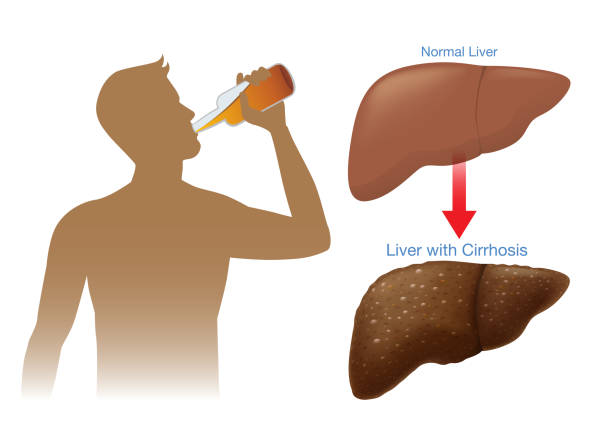
The third and last stage of ARLD is cirrhosis. By this stage, the liver becomes majorly scarred. While cirrhosis is not reversible, stopping drinking alcohol immediately can prevent further damage and significantly increase the life expectancy of the patient.  People suffering from cirrhosis might have to go through a liver transplant. Major liver transplant hospital in Delhi considers patients for this major surgery if they have developed complications of cirrhosis despite having stopped drinking. Due to the severe nature of the surgery, only an experienced and reputed liver transplant surgeon in India should be consulted for it. Patients would have to stop drink alcohol while awaiting the transplant, and for the rest of their life as well, to ensure their well-being.

Insight On Alcoholic Fatty Liver Disease And Its Treatment

Proper functioning of the vital organs of the body is crucial to ensure the overall good health and well-being of a person. In case a major organ, such as the liver gets damaged, the results can be extremely detrimental for a person. The liver is responsible for performing a number of critical functions like preventing infections, regulating immune response, making proteins that help the blood clot and more.  People must seek out proper treatment and care, as soon as they are diagnosed with any liver condition.

Alcoholic fatty liver disease

There are several reasons due to which a liver might malfunction and get damaged, such as certain inherited genetic abnormalities, abnormalities in the immune system of the body or autoimmune diseases, accumulation of fat in the liver, as well as infection that is caused by parasites and viruses infecting the liver. In addition to these factors, chronic alcohol abuse over a number of years is also one of the most common causes of liver damage, and may result in alcoholic fatty liver disease.

Alcoholic fatty liver disease is a condition that affects several individuals across the world, and can worsen quite a bit if the patient doesn’t stop drinking in time. Prompt alcoholic fatty liver disease treatment should be sought out as soon as the patient is diagnosed with this condition.  In case this condition becomes too severe, and the liver loses its ability to function, leading to liver failure, then the patient may have to undergo a transplant. A liver transplant is the only way to cure irreversible liver failure. People must consult any experienced liver transplant surgeon in India if they have to undergo this procedure.  A liver transplant can however only be considered if the patient is well enough to survive such an operation.

What happens in a liver transplant?

 In this surgical procedure, the damaged liver is removed from the body of the patient and is replaced with a healthy liver from a deceased donor or even a portion of a healthy liver coming from a living donor. Due to the high severity of the procedure, it is imperative that people visit the best liver transplant hospital in Delhi n case they have to go through this surgery. Patient suffering from alcoholic fatty liver disease usually is recommended to go for a liver transplant mostly in case they develop progressive liver failure, despite of not continuing to drink alcohol.

A Brief Insight On The Two Types Of Liver Transplants

Liver transplant surgery is done to remove the diseased or injured liver of the patient, and then replace it with a healthy liver from another person referred to as the donor.  A liver transplant is usually done when the organ gets damaged beyond repair, and replacing it is the only way to save the life of a person.  A liver transplant can be recommended as an Alcoholic fatty liver disease treatment, if the damage suffered by the organ is too high.

A liver transplant is not a simple surgery. In fact, it is quite a complex procedure that requires skilled medical attention. Hence, people should ideally consult only well-qualified and experienced liver transplant surgeon in India if they are recommended with this surgery.

Liver transplant can be of two types, and here is a brief insight about both of them:

  • Deceased donor transplants: The majority of the livers used for transplantation comes from people who have just died. These people are referred to as deceased donors. During deceased donor transplantation, the surgeons ideally remove the diseased or injured liver of the patient and subsequently replace it with a healthy organ.  Adults usually receive the entire liver from a deceased donor. However, in certain situations, they may split the liver of the deceased donor into two parts. While the larger one can go to an adult, and the smaller part may go to a child
  • Living donor transplants: In certain scenarios, healthy living people do donate a part of their liver. Usually, such organs are donated for a family member or friend who needs an urgent liver transplant. This procedure is called a living donor transplant. In such surgeries, the diseased or injured liver of the patient is removed and then and replaced with the part from the living donor.  The liver of the living donor grows back to normal size soon after the surgery. After a span of time, the part of the liver that the patient receives also grows to normal size. Living donor transplants are comparatively less common than deceased donor transplants.

After getting their surgery done at any renowned Liver transplant hospital in Delhi, the patients have to keep seeing the doctor often to ensure that their new liver is working appropriately. They ideally have to go for regular blood tests to check for signs of organ rejection, as well as take certain medicines